
A well-organized kitchen doesn’t just look better—it makes cooking faster, reduces food waste, and helps you save money. Whether you live in a spacious home or a compact apartment, using smart storage methods can transform the way you prepare and store food.
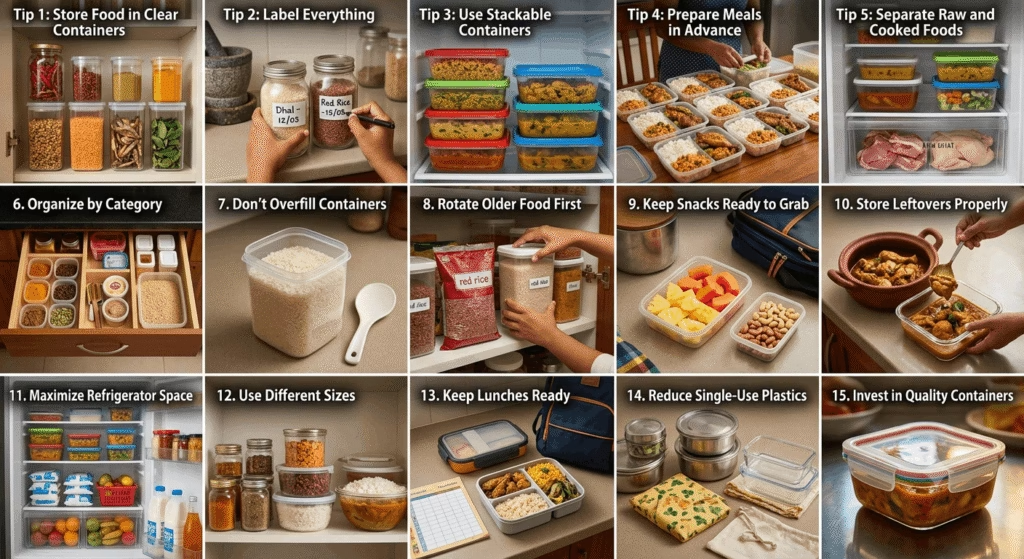
From leftovers and dry ingredients to weekly meal prep, proper organization helps everything stay fresh and easy to find. Here are 15 practical kitchen storage tips that every Sri Lankan household can benefit from.
1. Store Food in Clear Containers
Transparent containers allow you to see what’s inside without opening every lid. This saves time and helps prevent food from being forgotten in the refrigerator or pantry.
2. Label Everything
Adding simple labels with the food name and storage date makes it easy to identify meals and ingredients. It also encourages you to use older items first.
3. Use Stackable Containers
Stackable food containers make the most of limited refrigerator and cupboard space. They create a tidy, organized look while allowing you to store more food efficiently.
4. Prepare Meals in Advance
Cooking meals in batches and storing them in individual containers makes busy weekdays much easier. It also reduces the temptation to order takeaway food.
5. Separate Raw and Cooked Foods
Always keep raw meat, seafood, and poultry separate from cooked meals and fresh produce to reduce the risk of cross-contamination.
6. Organize by Category
Group similar foods together, such as vegetables, fruits, dairy products, snacks, and cooked meals. This makes shopping lists easier and speeds up meal preparation.
7. Don’t Overfill Containers
Leave a little space inside containers instead of packing them completely full. This helps maintain food quality and makes containers easier to close securely.
8. Rotate Older Food First
Follow the “first in, first out” method. Place older food at the front and newly prepared food behind it to reduce waste.
9. Keep Snacks Ready to Grab
Wash and portion fruits, nuts, or healthy snacks into smaller containers. This makes healthy eating more convenient for both adults and children.
10. Store Leftovers Properly
Instead of leaving leftovers in cooking pots, transfer them into food storage containers once they have cooled. This keeps your refrigerator organized and helps preserve freshness.
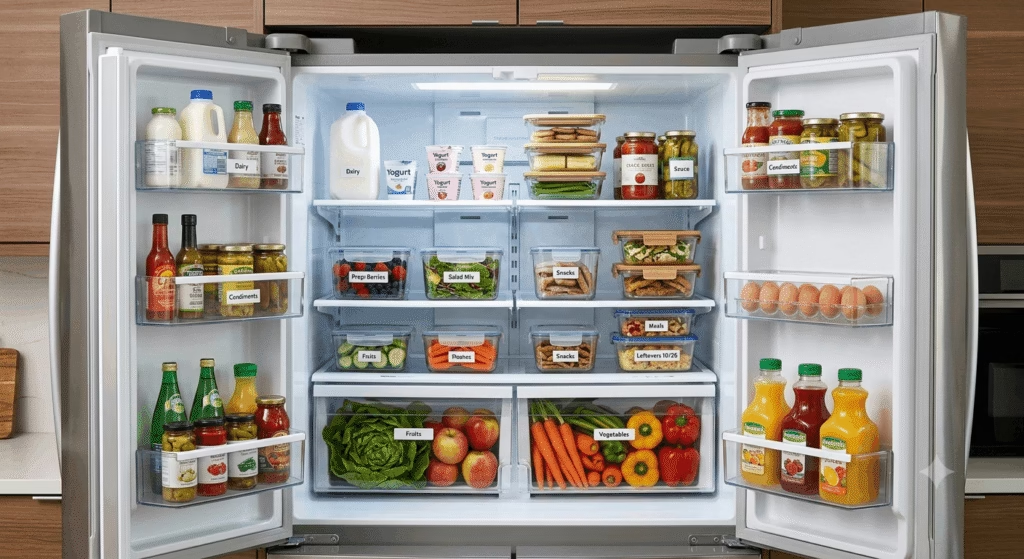
11. Maximize Refrigerator Space
Arrange containers neatly instead of stacking food randomly. A well-organized refrigerator improves airflow and makes everything easier to find.
12. Use Different Sizes for Different Needs
Small containers are perfect for sauces, spices, and snacks, while larger containers are ideal for rice, curries, pasta, and family meals.
13. Keep Lunches Ready
Preparing tomorrow’s lunch the night before saves valuable time during busy mornings. Simply take the container from the refrigerator before leaving home.
14. Reduce Single-Use Plastics
Reusable food containers are a practical alternative to disposable plastic bags and takeaway packaging. Over time, they help reduce household waste and save money.
15. Invest in Quality Food Storage Containers
Choosing durable, food-grade containers with secure lids is one of the best investments you can make for your kitchen. High-quality containers last longer, protect food better, and make daily organization much easier.
Why Good Food Storage Matters
Proper food storage offers several advantages:
- Keeps food fresher for longer
- Reduces food waste
- Saves money on groceries
- Makes meal preparation quicker
- Keeps kitchens neat and organized
- Supports healthier eating habits
- Makes transporting meals easier
These simple improvements can make everyday cooking more efficient while helping families stay organized.
Frequently Asked Questions
Why should I use reusable food storage containers?
Reusable containers help reduce waste, keep food fresh, and make meal planning more convenient.
How do I organize my refrigerator efficiently?
Store similar foods together, use stackable containers, and label prepared meals with the date they were made.
Are food storage containers useful for office lunches?
Yes. They’re ideal for carrying homemade meals safely to work, school, or university.
What foods can be stored in meal prep containers?
Rice, curries, vegetables, pasta, fruits, salads, snacks, and many other everyday foods can be stored conveniently.


